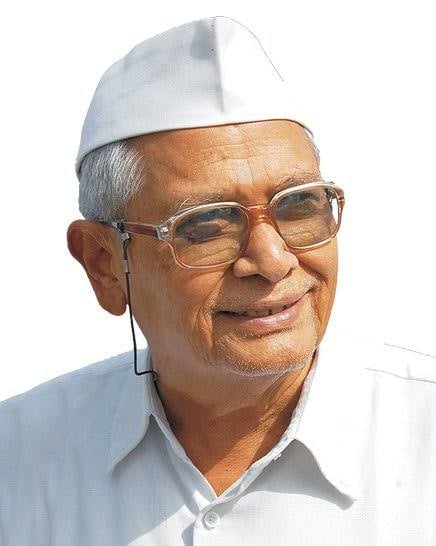
Vithalrao Vikhe Patil
Deceased – Former Agriculturist, Social Reformer and Cooperative Leader · Pravara Cooperative Movement / Pravara Sahakari Sakhar Karkhana / Pravara Rural Education Society
Vithalrao Eknathrao Vikhe Patil was an Indian agriculturist, social reformer and pioneering cooperative leader who played a foundational role in the development of Maharashtra's cooperative sugar industry. Born into a farming family at Loni, he witnessed the economic difficulties faced by sugarcane growers, including poor marketing conditions, indebtedness and dependence on private sugar interests. He came to regard the cooperative model as a means of enabling farmers to collectively process and market their produce and participate directly in industrial development. His most important achievement was organizing sugarcane growers from villages around Pravaranagar and helping establish the Pravara Cooperative Sugar Factory, which was commissioned in 1950 and is widely recognized as Asia's first cooperative sugar factory. The Marathi Vishwakosh records that the factory was established at Pravaranagar on 31 December 1950, with Vithalrao Vikhe Patil serving initially as vice-president while Dhananjayrao Gadgil served as chairman. Vikhe Patil subsequently extended his vision beyond sugar production to education, rural banking, healthcare and broader rural development. The Pravara Rural Education Society, established in 1964 under his leadership, was intended to bring quality education to rural communities and promote women's education and empowerment.
Cooperative sector involvement
Founder / Founder Chairman
Pravara Rural Education Society
The society was established with the objectives of providing high-quality education comparable to urban institutions and promoting women's empowerment through education.
Founder and pioneer
Pravara Sahakari Sakhar Karkhana Limited
The Pravara factory is the central achievement associated with Vikhe Patil. Farmers from the surrounding region were organized to participate in a cooperative sugar enterprise. The factory was commissioned in 1950 and is widely described by institutional and historical sources as Asia's first cooperative sugar factory. The Marathi Vishwakosh records that Vikhe Patil served as vice-president during the initial period, while Dhananjayrao Gadgil served as chairman for the first eleven years at Vikhe Patil's request. Vikhe Patil later became chairman of the factory in 1960.
Founder / Founder Chairman
Cooperative Sugar Industry in Maharashtra
Vikhe Patil became an important figure in the expansion of the cooperative sugar model in Maharashtra. His work helped establish the idea that farmers could collectively own and operate sugar-processing enterprises and use the resulting economic activity for broader rural development. The historical development of Maharashtra's cooperative sugar industry subsequently involved state-level cooperative federations and national cooperative sugar organizations.
Career & education
Notable roles & positions
Founder and pioneer of the Pravara cooperative sugar movement
Founder/pioneer of Pravara Sahakari Sakhar Karkhana
Vice-President of the Pravara cooperative sugar factory during its early period
Chairman of the Pravara cooperative sugar factory from 1960
Founder/leader of Pravara Rural Education Society, established in 1964
Contributions & impact
Pioneer of Cooperative Sugar Manufacturing
Vikhe Patil's most important contribution was demonstrating that sugarcane farmers could collectively establish and participate in a modern sugar-processing enterprise. The Pravara factory, commissioned in 1950, became a landmark in India's cooperative sugar history.
Farmer Ownership and Participation
The Pravara model shifted farmers from being merely agricultural producers toward being participants in the processing and marketing of their own produce.
Cooperative Institutions Beyond Sugar
His cooperative vision extended into dairy, banking and other rural institutions. Institutional records list the Pravara cooperative bank and Pravara cooperative dairy among organizations connected with the broader movement.
Rural Economic Development
The cooperative sugar enterprise became the economic foundation for wider development in Pravaranagar. The later Pravara movement expanded into education, healthcare, banking and other social institutions.
Achievements
Expansion of Rural Education
1964His establishment of the Pravara Rural Education Society in 1964 created a long-term institutional framework for rural education.
Asia's first cooperative sugar factory
1950The establishment of the Pravara cooperative sugar factory in 1950 is his defining achievement. Multiple institutional and historical sources identify it as Asia's first cooperative sugar factory.
Development of the Pravara Model
The Pravara experiment demonstrated how cooperative agriculture could be connected with industrial processing and rural development.
Broader Cooperative Development
The institutions associated with the Pravara movement subsequently extended into banking, dairy, healthcare and education, creating a broader rural development ecosystem.
Awards & honors
Padma Shri
1961Institutional sources also state that he received honorary academic distinctions, including an honorary D.Litt. and Doctor of Science, but the dates differ among institutional sources. Therefore, if strict verification is required, these should either be separately sourced or omitted from the main profile.