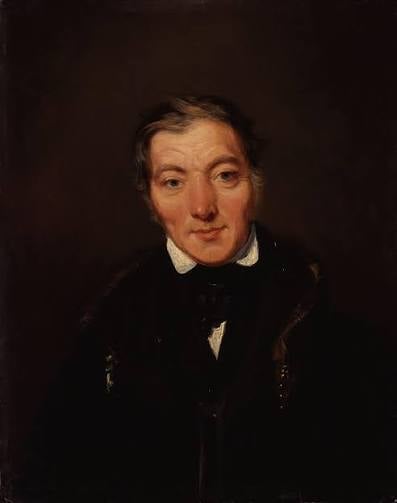
Robert Owen
Apprentice Draper & Textile Manager · Independent Drapers / Cotton Mills
Robert Owen was a Welsh textile manufacturer, philanthropist, and social reformer widely recognized as one of the founding fathers of the cooperative movement and utopian socialism. At his New Lanark cotton mills in Scotland, he pioneered humanistic industrial management by reducing work hours, banning young child labor, establishing free early childhood education, and setting up village stores that operated for community welfare. His belief that character is shaped entirely by environment led him to establish experimental self-sustaining cooperative communities, including New Harmony in Indiana, USA. A steadfast advocate for trade unionism, labor rights, and equitable exchange, Owen laid the ideological groundwork that inspired modern consumer cooperatives, labor reforms, and social enterprise models worldwide.
Cooperative sector involvement
Managing Partner & Industrial Reformer
New Lanark Mills & Village Store
Transformed a major cotton spinning enterprise into a model cooperative society. Established village stores supplying quality goods at cost price—passing savings directly to workers—which served as the direct precursor to the Rochdale Principles and modern consumer cooperative stores.
Founder & Leader
New Harmony Community
Established an experimental cooperative community in Indiana based on collective ownership, shared labor, and egalitarian distribution. The community served as an early testing ground for cooperative governance and educational reforms.
Career & education
Notable roles & positions
Founder & Managing Director
New Lanark Twist Company
Led groundbreaking humanistic industrial experiments combining profitable manufacturing with worker welfare and universal education.
Founder & Community Leader
New Harmony Cooperative Community
Established an experimental utopian socialist community grounded in collective property ownership and shared labor.
Contributions & impact
Universal Early Childhood Education & Labor Reform
1816Created Britain's first nursery school and infant educational system while successfully campaigning for child labor restrictions under the Factory Act of 1819.
Modern Cooperative Movement Framework
1800Established village stores selling unadulterated goods at wholesale prices to workers, inspiring the Rochdale Principles and modern consumer cooperatives.
Notable works
Outlined his core philosophy that human character is shaped by social environment, advocating for universal education and social reform.
Achievements
Eight-Hour Workday Campaign
1817Formulated and popularized the historic slogan "Eight hours labour, Eight hours recreation, Eight hours rest", setting a international benchmark for labor rights and workday limits.
Pioneer of the Modern Cooperative Movement
1800Successfully laid the foundational blueprint for modern consumer cooperatives by establishing village stores that provided unadulterated goods at cost price to mill workers at New Lanark.
Awards & honors
UNESCO World Heritage Designation (New Lanark)
2001New Lanark was designated a World Heritage Site in recognition of Owen's historic model industrial village and social reforms.