Jaswantrai Mehta
Chief Organizer & Financial Advisor · Shri Mahila Griha Udyog Lijjat Papad
Jaswantrai Mehta was a visionary co-founder, chief organizer, and financial advisor of the Shri Mahila Griha Udyog Lijjat Papad cooperative. In 1959, he provided crucial administrative, legal, and structural guidance to seven semi-literate Gujarati women in Mumbai who started a small papad-rolling venture with a borrowed capital of just 80 rupees. He drafted a strict cooperative constitution anchored in absolute inner ownership, self-reliance, and equal profit distribution, while firmly insisting that the organization never accept donations, charity, or government grants. Under his mentorship, the venture expanded into a massive national enterprise under the "Lijjat" brand, empowering tens of thousands of lower-income women across India.
Cooperative sector involvement
Co-founder, Chief Organizer, and Financial Advisor
Shri Mahila Griha Udyog Lijjat Papad
Mentored seven founding women to establish a self-sustaining cooperative enterprise. Framed governance principles that mandated complete financial independence, non-acceptance of charity, equal profit sharing, and economic self-reliance for all female worker-members.
Career & education
Notable roles & positions
Co-founder & Chief Organizer
Shri Mahila Griha Udyog Lijjat Papad
Guided the expansion of the cooperative network into multiple states, turning it into one of India's most successful women-led cottage industries.
Contributions & impact
Financial Independence & No-Charity Rule
1959Enforced a strict business philosophy that rejected donations, grants, or charity, ensuring the cooperative achieved long-term commercial self-reliance.
Notable works
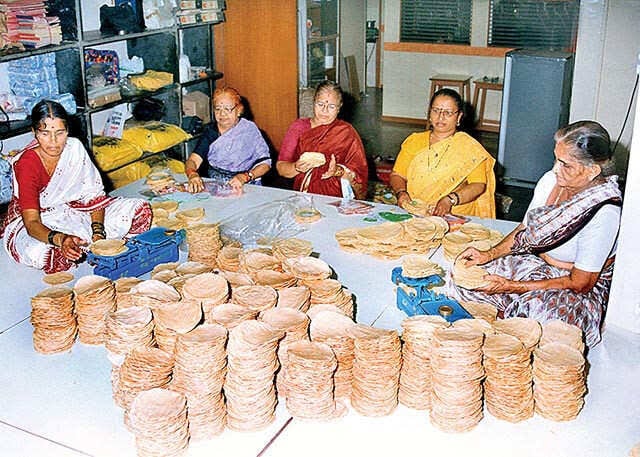
Jaswantrai Mehta served as a key organizer and financial and administrative advisor during the early development of Shri Mahila Griha Udyog Lijjat Papad. He provided legal and structural guidance to the seven women who began the venture in Mumbai in 1959 with borrowed capital of ₹80. He helped establish a cooperative framework based on self-reliance, collective ownership, equal participation, and equitable distribution of profits. He also supported the principle of financial independence by emphasizing that the organization should operate without charity, donations, or government grants. The model subsequently developed into a large women-led cooperative providing livelihood opportunities through decentralized household production and centralized quality standards.
Establishment and Development of Shri Mahila Griha Udyog Lijjat Papad
Achievements
Gold Standard Model for Women's Empowerment
1988Co-created a decentralized production and quality model later studied globally by prestigious institutions like Harvard Business School as a benchmark for socio-economic empowerment.
Building a National Women's Enterprise
1959Transformed a micro-venture started with ₹80 into a national cooperative brand employing tens of thousands of lower-income women across India.
Awards & honors
Posthumous Industrial & Cooperative Pioneer Recognition
1988Honored posthumously for his foundational role in organizing and scaling one of India's most iconic women-led cooperative enterprises.
Legacy and Impact